
The educational program will be held during 2 days of the festival,
on May 19 and 20 in the daytime in Mironova Gallery
Address: 9 Lavrskyi Lane, 9

Address: 9 Lavrskyi Lane, 9
Saturday 19.05.2018
14:00 Jordi Pont
All you cannot see behind a mapping project (lecture in English with translation)
16:00 Andrey Yamkovoy
Complex surface projection mapping: Scull at Max Barskih Concert
18:00 Nataliya Matsenko
The borders of the visible. Light as a medium in the contemporary art
Sunday 20.05.2018
14:00 Romain Tardi
A little less pictures, a little more space: expanded animation and the poetics of scale (lecture in English with translation)
16:00 The award ceremony of the 3D video mapping and VJing Contests
18:00 Glib Ushakov
Modern city is growing through the historic city: trends and possibilities
Jordi Pont, a project manager of multidisciplinary studio Onionlab (onionlab.com) based in Barcelona, will talk about the focus of Onionlab, different artistic projects where the intersection between art and technology is the principal base. We will discuss everything you cannot see behind the scenes,
The making of some of the most important Onionlab projects, as well as the technical part and the methodology of teamwork, dealing with clients and the stories you normally don’t get to hear.
Onionlab creates interactive experiences and products, motion design movies and audiovisual shows for companies that want to be related with technology, design and art.
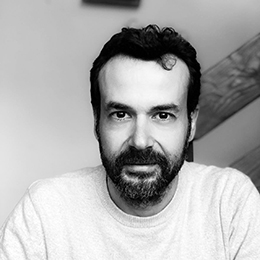 Jordi Pont – is a visual artist from Barcelona. In 2011, he became a project manager at Onionlab, a Barcelona-based studio. There, he did such outstanding projects as Towards Biology (360º installation at the Venice Biennale 2014), Diplopia 3D at FIMG2015 (first stereoscopic mapping in Spain) and Room 5 (installation at Spain’s pavilion at the Milano Expo 2015).
Andrey will talk about the 3D mapping show on a 6.5-meter skull – the focal decoration at a concert of a popular Ukrainian singer Max Barskih. The lecture provides a glimpse into the creation of projection mapping shows on complex organic surfaces. You will find out the complete pipeline – from the initial idea to fabrication of the decoration, projection tests, graphics production, rehearsals, and projector alignment before the concert. If you dream to make mapping but don’t know what to start with, come here to find the answers.
 Andrey Yamkovoy – has been working at Front Pictures (www.frontpictures.com) since 2005. The company is a leading provider of visual solutions for events, advertising, education, and entertainment. It is also the co-founder of KLF. Among his favorite projects which he used to work on are a multimedia A-gallery at Kyiv shopping mall ART Mall, fulldome applications Presenter360 and Meduza360. Lectures: TouchDesigner Summit(Berlin, Germany), Signal Festival(Prague, Czech Republic), BlckBox (Kiev, Ukraine), Plums Festival(Moscow, Russia).
Visual art and visual perception are not possible without light. But with the development of technologies in the 20th century, a separate form of art appears where light becomes not only an additional means of expression but also the main medium. During the lecture you will find out when artists began to use light as an independent medium, what is the light art and what are its main forms. You will see how artists transform space and spectator’s perception with the help of light through works by Dan Flavin, Olafur Eliasson, James Tarrell, Robert Irwin, Chrissy and other celebrities of the light art.
 Natalia Matsenko – is an art expert, curator of exhibition projects and art residences, art critic. Since 2013, she is one of permanent curators of the international art residence BIRUCHIY Contemporary Art Project.
“As far as I can remember, I feel that I really started to create pictures when I stopped using flat canvas only, may it be a screen or a sheet of paper.
Of course, in addition to the fictional space inherent to any image, there is an actual, physical space within the screen or the sheet of paper. However, the distance between the surface and the body of the viewer always appeared to me as an impassable ocean — even if these two elements are only distant from a few meters.
I started to notice that for some odd reason, adding physical distance between the spectator and the artwork could increase their proximity.
The picture comes from the physical experience of being there. These pictures are not only visible through the eyes, but through the whole body. What’s outside the frame matters as much as what’s inside the frame. The frame, as well as the technical device, disappear.”
The installations of Romain Tardy, which often use the technique of videomapping, are conceived as tangible experiences in situ and use light as a way to enhance existing architecture or original structures.
By examining our relationship to reality as we are confronted by computer imagery and the social changes that it triggers, as well as the way that digital technology is situated in public space, Tardy’s installations seek to evoke these current issues through a poetic approach.
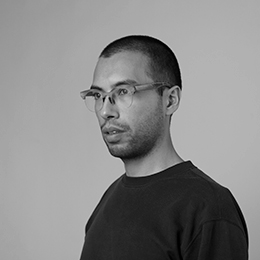 Romain Tardy – is a visual artist from France. He is a co-founder of the European visual label Antivj, which focuses on the use of projected light and its influence on our perception. Tardy’s installations pose questions about the role of digital technology in public space and address them poetically. His work has been exhibited in more than 15 countries.
A new city breaks through the canvas of its ancient predecessor. It aggressively transforms, develops, complements and integrates into the historic background. We will explore aspects of the harmonious inclusion of the new architecture into the historical environment through specific examples. Aesthetics and awareness of the urban environment: layers of the city, the value of the an, location, free urban space, ravages of time. We will see what new opportunities modern architectural trends provide. This concerns the difference between pseudo-ecology and actual ecology. We will also talk about samples of new forms and properties of a high quality public space: fully and partially open city atriums, the integration of three-dimensional structures of the environment into a traditional planar city instead of building jungles of tower-shaped skyscrapers.
Summing up, we will discuss life trends of cities, modern and futuristic capabilities of architecture and its relation to humans and nature when turning a historic city into a modern metropolis.
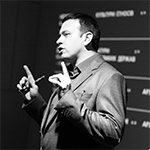 Gleb Ushakov – holds an academic degree in architecture. Associate professor at Kyiv National University of Construction and Architecture. Lector at Culture Project